

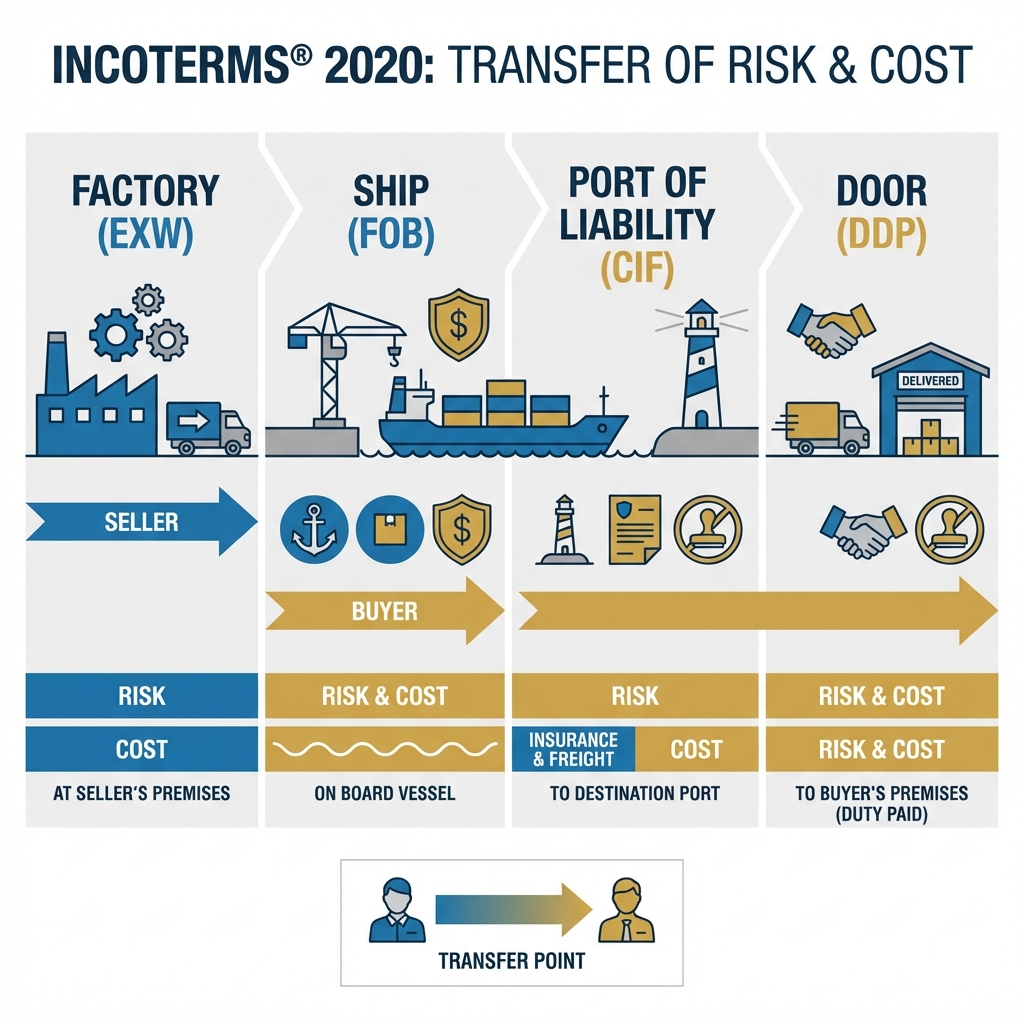
Incoterms 2020 in Morocco: FOB, CIF, EXW... Which to choose in 2026?
Don't let your supplier decide your logistics. Master Incoterms 2020 to secure your imports to Morocco and avoid hidden costs in CIF or EXW.
Equipe Casa Horizon
Transitaire agréé
Sommaire
Executive Summary
In the world of import-export, Incoterms (International Commercial Terms) are the universal language that defines who does what, who pays what, and above all, at what moment risk is transferred from seller to buyer. In 2026, with the growing complexity of Moroccan ports and new traceability requirements, poor Incoterm management can turn a "good deal" into a financial nightmare.
Many Moroccan importers are seduced by the simplicity of CIF or the apparent low price of EXW. Yet, at Casa Horizon, every day we see companies losing money due to hidden fees at the port of Casablanca or Tangier Med. Here is our analysis to choose the most profitable Incoterm in 2026.
🌍 Incoterms 2020: The Essentials
Incoterms are not laws, but contractual clauses. They determine three critical points:
- Cost allocation: Who pays for transport, insurance, and taxes?
- Risk transfer: If the container falls into the water, who is responsible?
- Documentary obligations: Who prepares documents for customs?
🛑 EXW (Ex Works): The Beginner's "False Friend"
The EXW Incoterm means the seller makes the goods available at their factory. It's the lowest price on the invoice.
The Trap:
You, the importer, are responsible for everything. You have to find a carrier in a foreign country (e.g., deep in China), handle export customs clearance, and assume risks as soon as the box leaves the factory.
Risk in Morocco:
If your supplier doesn't prepare export documents correctly, your goods can remain stuck abroad while you've already paid for them.
✅ FOB (Free On Board): The Choice of Control
In FOB (sea only) or FCA (multimodal), the seller delivers the goods to the port of departure and handles export formalities.
- The Advantage: Risk transfers to you once goods are on the vessel.
- Control: You choose the forwarder (like Casa Horizon). You master freight costs, know exactly when the ship arrives, and avoid margins that suppliers often add on transport.
⚠️ CIF (Cost, Insurance, Freight): Hidden Arrival Costs
CIF is very popular: the seller pays transport and insurance to the port of Casablanca. It seems ideal, but it's often a "poisoned gift".
- Local Fees: The supplier often chooses the cheapest carrier for them. Result? Upon arrival in Morocco, you end up with exorbitant deconsolidation or handling fees (THC) you hadn't planned for.
- Demurrage: In CIF, you don't control the shipping line. If the vessel has very short free time periods, you'll pay late penalties (Demurrage) starting from day 3.
📊 Responsibility Comparison Table
| Incoterm | Main Transport | Insurance | Export Customs | Import Customs |
|---|---|---|---|---|
| EXW | Buyer | Buyer | Buyer | Buyer |
| FOB / FCA | Buyer | Buyer | Seller | Buyer |
| CIF / CIP | Seller | Seller | Seller | Buyer |
| DDP | Seller | Seller | Seller | Seller |
🧮 Incoterms and Moroccan Customs: CAF Value
Regardless of the chosen Incoterm, Moroccan customs always calculates taxes on the CIF Value (Cost, Insurance, Freight).
If buying FOB:
Taxable_Value = FOB_Price + Freight + Insurance
If buying EXW:
Taxable_Value = EXW_Price + Pre-carriage + Export_Customs + Freight + Insurance
Note: Customs verifies that freight declared in CIF is not undervalued. If freight cost seems too low, they may "adjust" the value.
💡 Casa Horizon Advice: Why choose FOB/FCA?
In 2026, agility is your best weapon. We recommend to 90% of our clients to import in FOB (for sea) or FCA (for air and road).
- Cost Control: You pay the real freight price without supplier markup.
- Visibility: Thanks to our PortNet interface, you track your goods in real time.
- Freedom: You are not tied to a shipping line imposed by the seller, making it easier to negotiate demurrage free time in Morocco.
✅ Quick Takeaways: What to remember
EXW = Danger
FOB = Optimal
CIF = Hidden Costs
DDP = Rare
💡 Conclusion
Mastering Incoterms means mastering your cost price. In 2026, don't let your supplier decide your logistics.
By taking back control via an Incoterm like FOB or FCA, you not only secure your goods but also optimize your cash flow. At Casa Horizon, we help you negotiate these clauses with your suppliers so you only pay what is fair, without bad surprises at unloading.
❓ FAQ
What is the most used Incoterm for importing from China?
Can I use FOB for air shipment?
In CIF, who is responsible if the boat sinks?
Does Incoterm affect Article 19 bis?
Why avoid DDP in Morocco?
Sources & Références
Read also
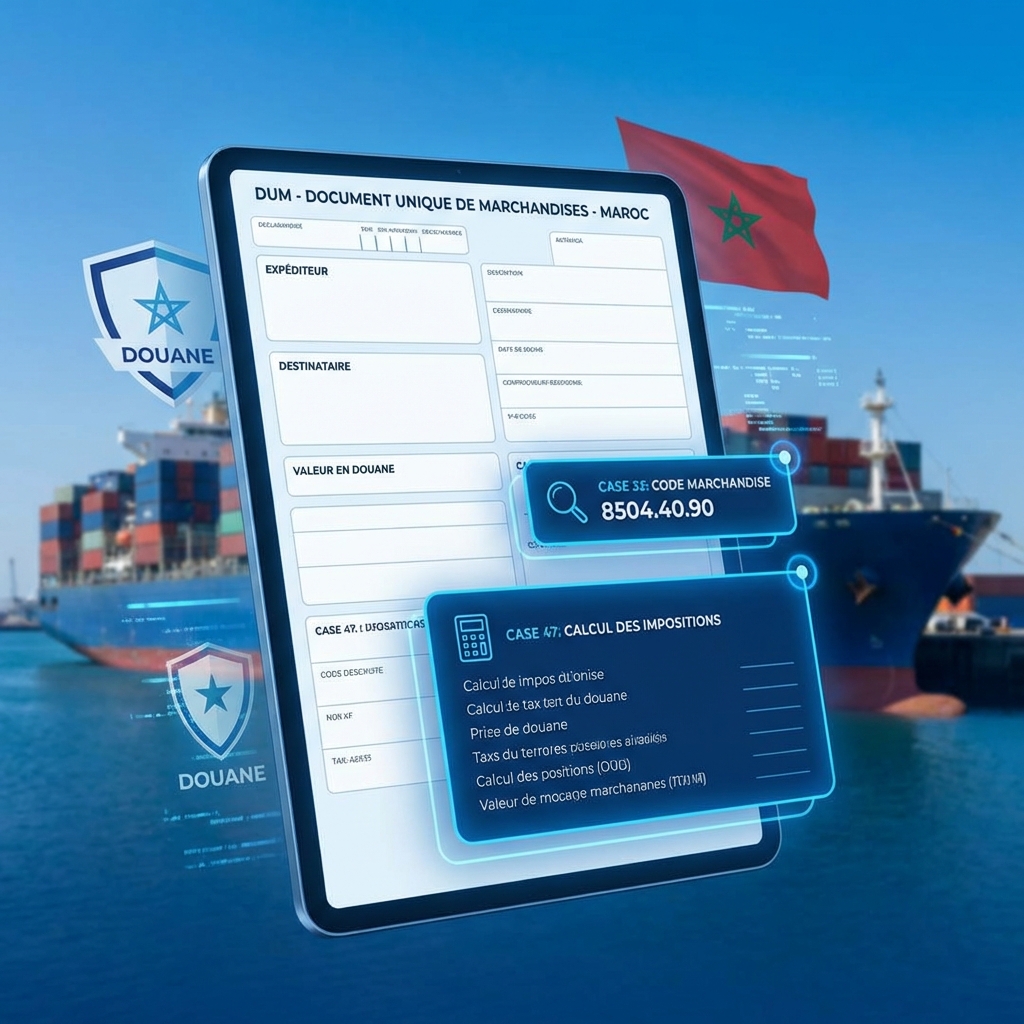
The DUM (Single Goods Declaration): Learning to read your customs passport
It is the birth certificate of your goods. Learn to decipher Box 33 (HS Code) and Box 47 (Tax Calculation) to stop paying blindly.
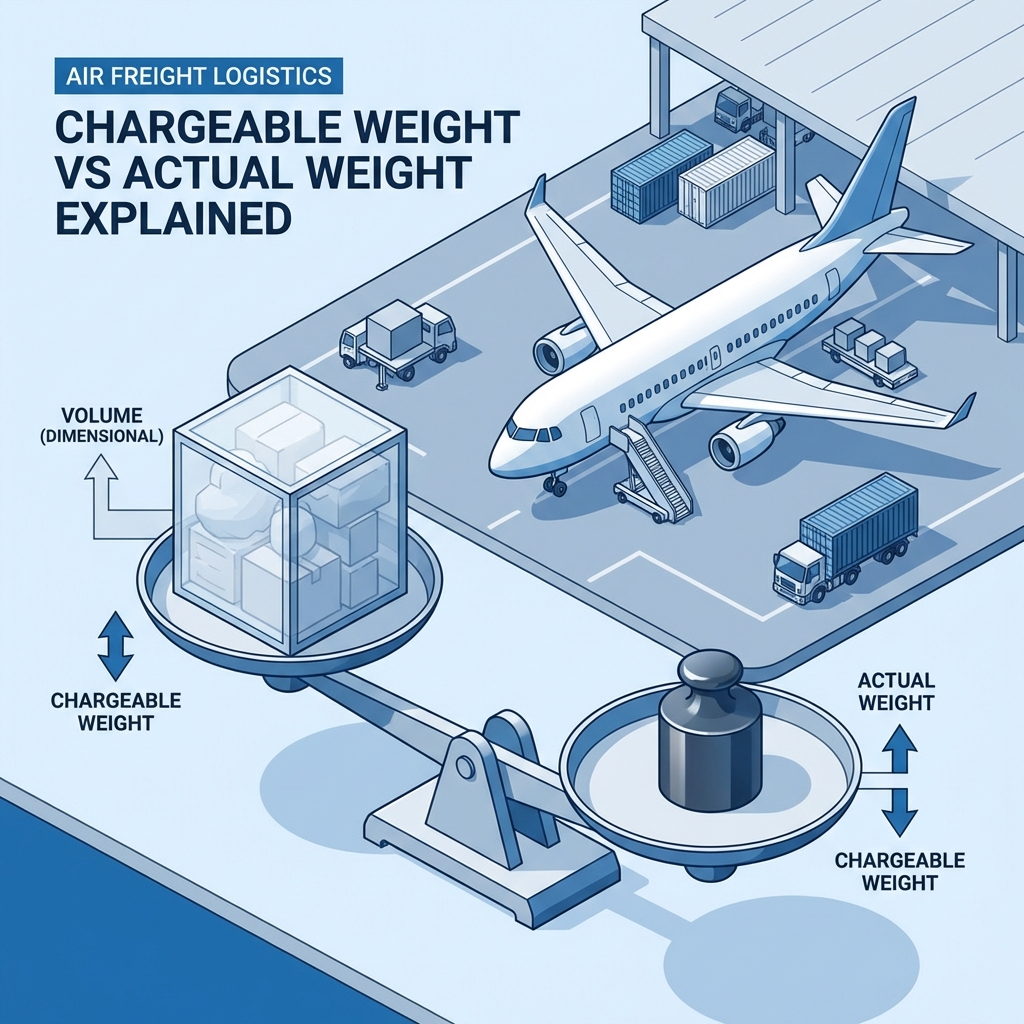
Chargeable Weight & Volumetric Weight: Why is your air freight so expensive?
Paying for air? Understand the IATA volumetric weight rule and learn how to calculate your chargeable weight to reduce your air freight bills to Morocco.
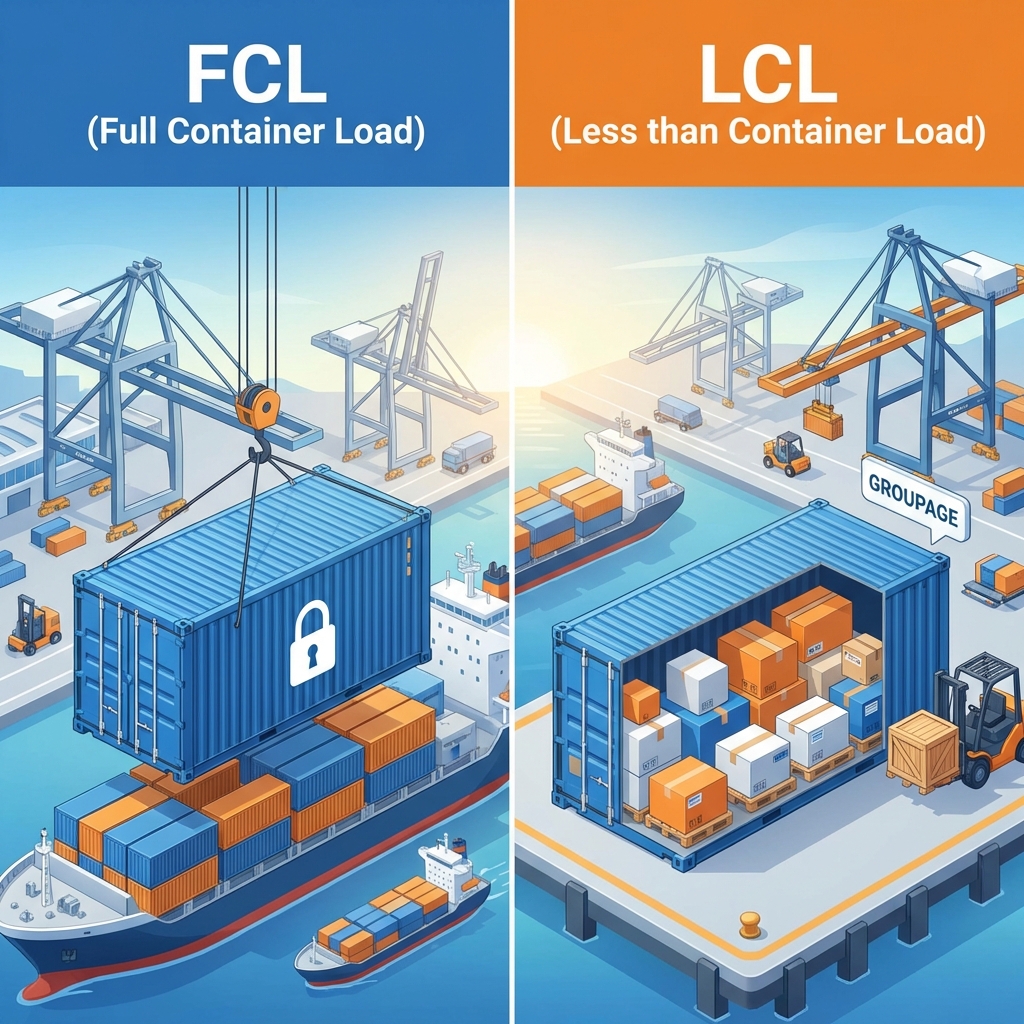
FCL vs. LCL: How to choose for your imports to Morocco?
Full Container Load (FCL) or Less than Container Load (LCL)? Save 15% to 20% on your sea freight by choosing the right mode. 2026 Technical Guide for Moroccan importers.
Let's Optimize Your Supply Chain
Discuss your logistics challenges with a trade expert.