

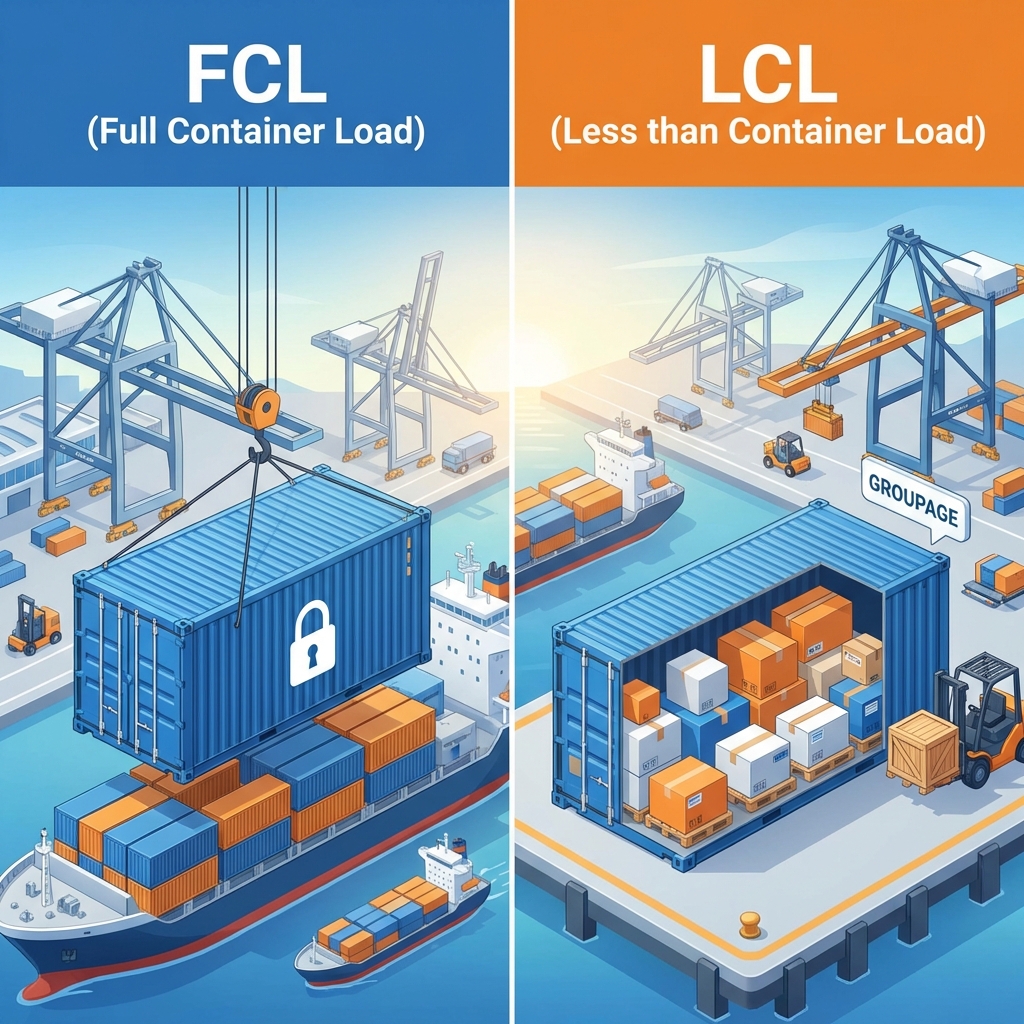
FCL vs. LCL: How to choose for your imports to Morocco?
Full Container Load (FCL) or Less than Container Load (LCL)? Save 15% to 20% on your sea freight by choosing the right mode. 2026 Technical Guide for Moroccan importers.
Equipe Casa Horizon
Transitaire agréé
Sommaire
Executive Summary
One of the first strategic decisions an importer must make, after finding their supplier, concerns the mode of sea transport. Two acronyms dominate the sector: FCL (Full Container Load) and LCL (Less than Container Load).
In 2026, with fluctuating freight rates and the optimization of groupage platforms at Tangier Med and the Port of Casablanca, choosing the wrong mode can erode your margin by 15% to 20%. This Casa Horizon technical guide helps you decide between full container and groupage to maximize your profitability.
🚢 Definitions: FCL and LCL Decoded
FCL (Full Container Load)
FCL means you rent the entire space of a container (20' or 40'). You are the sole master on board: the container is sealed at your supplier's factory and is only opened at destination (or by customs).
LCL (Less than Container Load) - Groupage
LCL consists of sharing container space with other importers. It is the equivalent of "carpooling" for goods. Your forwarder groups several small shipments to fill a full container.
🔒 FCL: The choice of security and speed
The full container is ideal for large volumes or fragile goods.
- Speed: No "groupage" delay at departure, nor "deconsolidation" at arrival. The container goes directly from the ship to the truck.
- Security: Less handling. Since your pallets are not moved to make room for others, the risk of breakage is reduced.
- Fixed Cost: You pay a flat rate for the container, regardless of whether it is 50% or 100% full.
📦 LCL: The flexible option for small volumes
Groupage is the preferred solution for Moroccan SMEs and e-merchants in 2026.
- Economy: You only pay for the space you actually occupy (measured in cubic meters or $CBM$).
- Stock Management: Allows importing small quantities more often, thus optimizing your cash flow.
- Delay: On the other hand, expect 5 to 7 days more than FCL for handling operations in the deconsolidation warehouse (MEAD).
⚖️ The Tipping Point: When to switch from LCL to FCL?
Golden Rule in 2026:
• Less than 13-15 CBM: LCL is generally more profitable.
• Over 15 CBM: It is often cheaper to rent a full 20' container (which has a capacity of 33 CBM), even if you leave it half empty. Why? Because local handling charges (THC) and deconsolidation fees in LCL are proportional to volume and end up costing more than the FCL flat rate.
📊 Comparison Table: FCL vs LCL
| Criteria | FCL (Full) | LCL (Groupage) |
|---|---|---|
| Ideal Volume | > 15 $CBM$ | 1 to 14 $CBM$ |
| Security | Maximum (sealed) | Average (handling) |
| Delay | Fast (Direct) | Longer (+5-7 days) |
| Local Cost | Flat Rate | Proportional to volume |
| Customs in Morocco | Clearance on truck/MEAD | Mandatory clearance in MEAD |
🧮 Cost Calculation: The CBM
In sea freight, cost is calculated on volume, unless the goods are extremely dense.
The cubic meter formula ($CBM$):
$$CBM = Length(m) \times Width(m) \times Height(m)$$
Example: If you import 10 cartons of $0.5m \times 0.5m \times 0.5m$, your total volume is $1.25\ CBM$. You will pay the LCL rate based on this volume.
🇲🇦 Moroccan Specifics: MEAD and Deconsolidation
In Morocco, LCL must transit through a MEAD (Customs Clearance Store and Area). In 2026, hubs like the Tit Mellil dry port or Tanger Med logistics zones specialize in express deconsolidation.
- FCL: Can be cleared directly at the port or transferred to MEAD under customs bond.
- LCL: Must be "unstuffed" (emptied from the shared container) before each importer can retrieve their lot.
✅ Quick Takeaways: What to remember
Volume < 15 CBM
Volume > 15 CBM
LCL Anticipation
Watch Costs
💡 Conclusion
Choosing between FCL and LCL is a constant trade-off between cost, time, and security. In 2026, agility is key: many Moroccan importers use LCL for product launches and switch to FCL once demand is stable.
At Casa Horizon, we analyze your package dimensions and time constraints to propose the most profitable solution. Sometimes, a small 20' container half-full is a better deal than overloaded groupage!
❓ FAQ
Can I use LCL for dangerous goods (IMO)?
Is customs clearance longer in LCL?
What is "Chargeable Weight" in sea freight?
Can I seal my lot in LCL?
What is the risk of loss in LCL?
Sources & Références
Read also
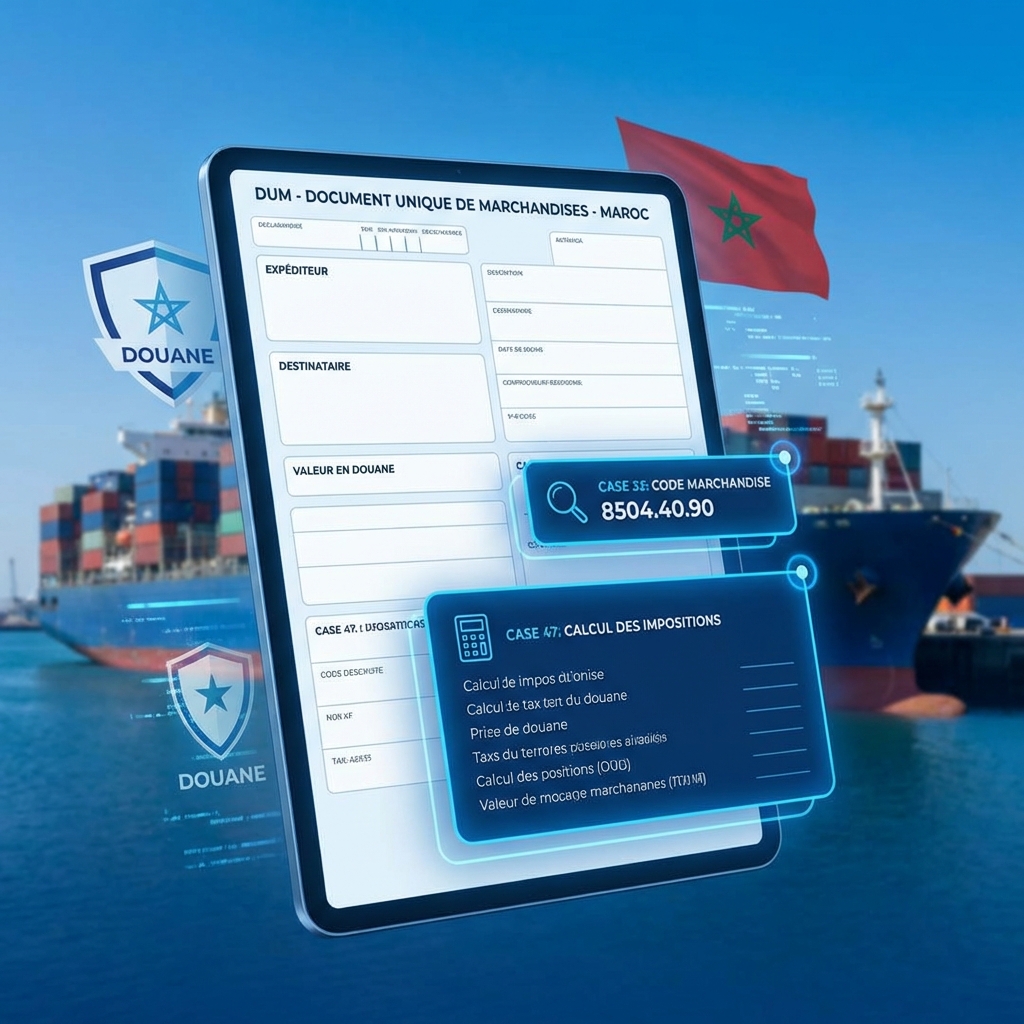
The DUM (Single Goods Declaration): Learning to read your customs passport
It is the birth certificate of your goods. Learn to decipher Box 33 (HS Code) and Box 47 (Tax Calculation) to stop paying blindly.
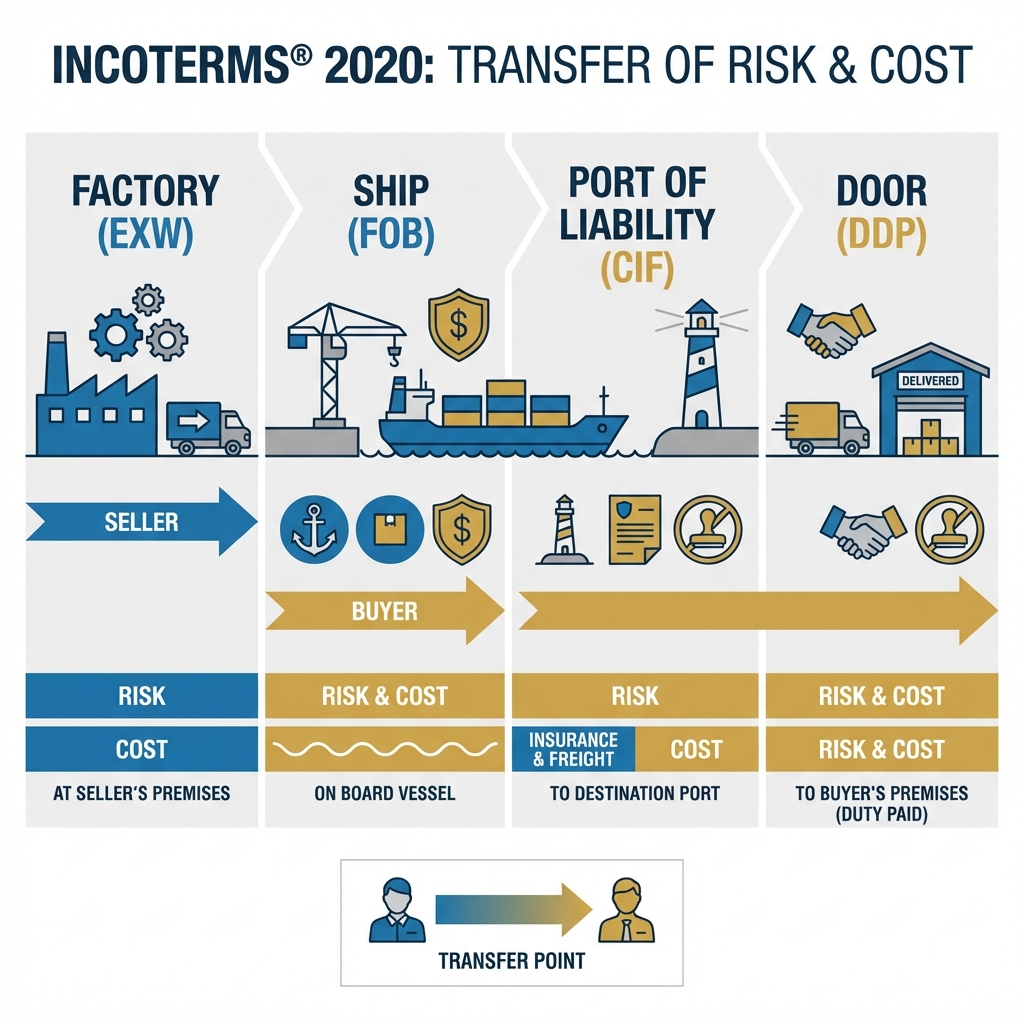
Incoterms 2020 in Morocco: FOB, CIF, EXW... Which to choose in 2026?
Don't let your supplier decide your logistics. Master Incoterms 2020 to secure your imports to Morocco and avoid hidden costs in CIF or EXW.
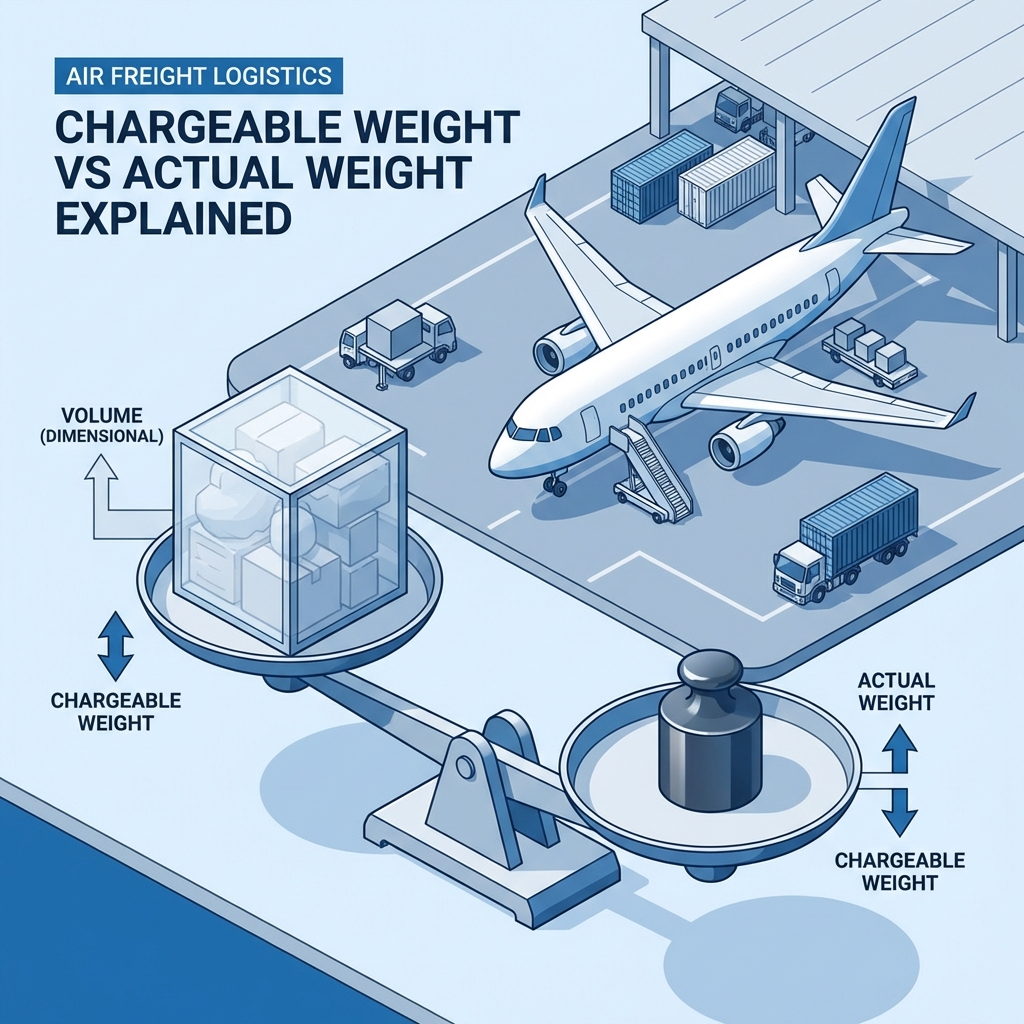
Chargeable Weight & Volumetric Weight: Why is your air freight so expensive?
Paying for air? Understand the IATA volumetric weight rule and learn how to calculate your chargeable weight to reduce your air freight bills to Morocco.
Let's Optimize Your Supply Chain
Discuss your logistics challenges with a trade expert.