

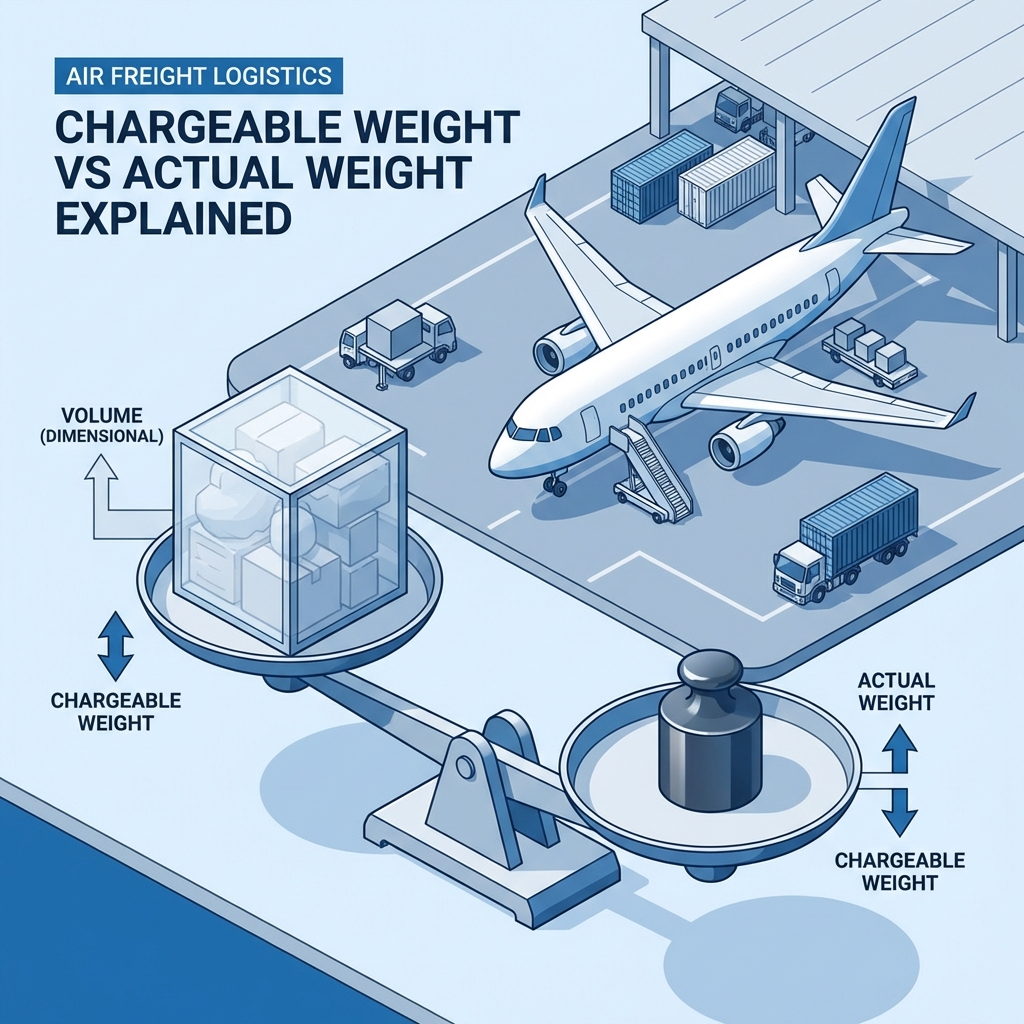
Chargeable Weight & Volumetric Weight: Why is your air freight so expensive?
Paying for air? Understand the IATA volumetric weight rule and learn how to calculate your chargeable weight to reduce your air freight bills to Morocco.
Equipe Casa Horizon
Transitaire agréé
Sommaire
Executive Summary
You ordered 50 kg of plush toys or air filters from France or China by air. When receiving the invoice from your freight forwarder, you are stunned to see that you are billed for 150 kg. Calculation error? Scam attempt? No: you have just discovered the chargeable weight rule.
In 2026, with the saturation of air cargo holds and the increase in fuel costs, airlines (RAM Cargo, DHL, Air France) strictly apply the volume ratio. In this article, Casa Horizon explains how to calculate your volumetric weight and, above all, how to optimize your packages so you no longer pay for "air".
✈️ The Concept: Why airplanes don't just weigh kilos?
An airplane has two physical limits: its lifting capacity (weight) and its available space (volume). Imagine filling an airplane with feathers. The plane will be packed full (volume reached), but it will be very light (weight not reached). For the airline, this is a loss of revenue.
It is to balance this ratio that IATA (International Air Transport Association) created Volumetric Weight. The idea is simple: if your goods take up a lot of space while being light, you will be taxed on the space you occupy rather than what you actually weigh.
⚖️ Actual Weight vs Volumetric Weight: The IATA Rule
For each shipment, two weights are calculated:
- Actual Weight (Gross Weight): This is what the scale shows when you put your package on it.
- Volumetric Weight (Dimensional Weight): This is a theoretical weight calculated from the package dimensions.
The golden rule: The carrier will always bill on the higher value of the two. This is called the Chargeable Weight.
🧮 The Magic Formula
In 2026, the standard formula applied by the majority of freight forwarders and airlines for international freight is as follows:
Volumetric Weight (kg) = Length(cm) × Width(cm) × Height(cm)6000
(Note: Some express carriers like DHL or FedEx sometimes use a divisor of 5000, which makes the volumetric weight even higher and therefore more expensive).
The 1:6 Ratio
In classic air freight, it is considered that 1 m³ = 166.67 kg. If your cubic meter weighs less than that, you fall into volumetric taxation.
📝 Practical Examples
Case A: "Dense" Goods (Ex: Auto Parts)
- Actual Weight: 100 kg
- Dimensions: 50 × 50 × 40 cm
- Calc: (50×50×40)/6000 = 16.6 kg
- Result: You pay for 100 kg (Actual > Volumetric).
Case B: "Light" Goods (Ex: Plush Toys)
- Actual Weight: 20 kg
- Dimensions: 80 × 60 × 50 cm
- Calc: (80×60×50)/6000 = 40 kg
- Result: You pay for 40 kg (Volumetric > Actual). Your bill doubles!
💡 Pro Tips: How to reduce volumetric weight?
- Avoid Void: Choose cartons perfectly adapted to the product size. If you leave 10 cm of empty space at the top of a carton, you are paying for air.
- Compress: For textiles or soft products, use vacuum packaging if possible.
- Consolidate: Sometimes, grouping several small cartons into one large carton optimizes dead angles and reduces total billed volume.
- Check the Divisor: Always ask your forwarder if they use a divisor of 5000 or 6000. At Casa Horizon, we negotiate the most advantageous divisor for our regular clients.
✅ Quick Takeaways: What to remember
Chargeable Weight
Standard Calc
Air Ratio
Optimization
💡 Conclusion
Mastering the concept of volumetric weight is essential for any importer wishing to use air freight to Morocco. In 2026, cargo hold space management has become so precise that every centimeter counts.
Don't be surprised by unexpected bills upon arrival at Casablanca Airport. By collaborating with Casa Horizon, we audit your dimensions from the supplier's warehouse to suggest packaging optimizations and guarantee you the fairest chargeable weight.
❓ FAQ
Why does my forwarder use 5000 as divisor instead of 6000?
Does volumetric weight apply to sea freight too?
What if my package is irregularly shaped?
Do pallets count in the calculation?
How does Casa Horizon help reduce these costs?
Sources & Références
Read also
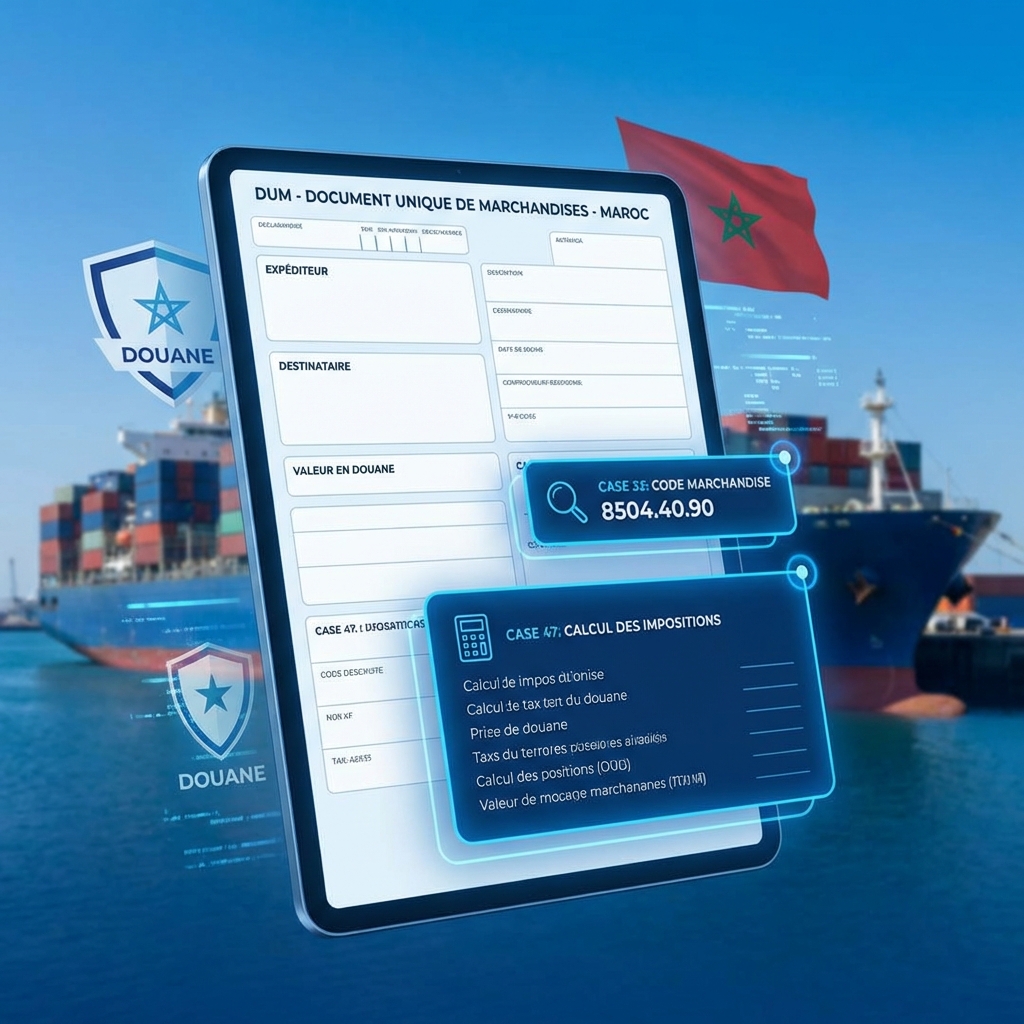
The DUM (Single Goods Declaration): Learning to read your customs passport
It is the birth certificate of your goods. Learn to decipher Box 33 (HS Code) and Box 47 (Tax Calculation) to stop paying blindly.
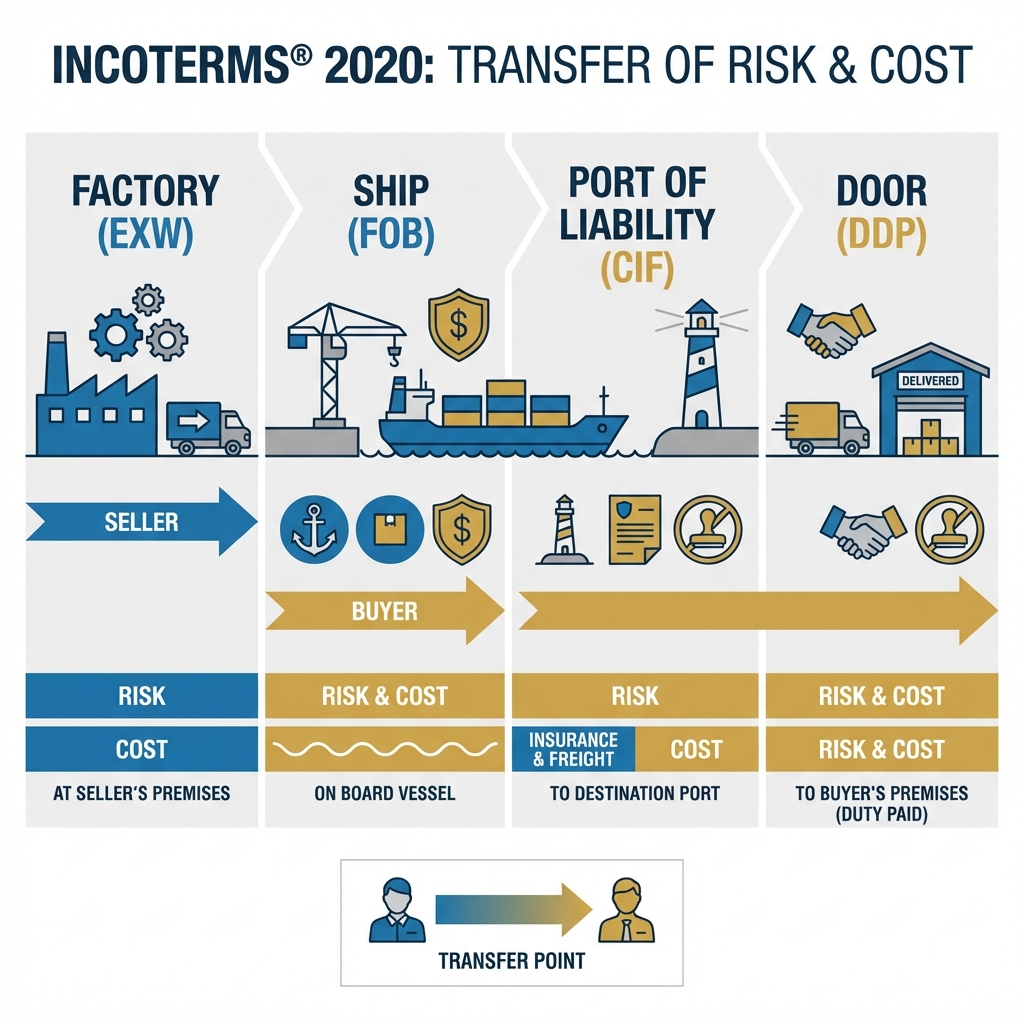
Incoterms 2020 in Morocco: FOB, CIF, EXW... Which to choose in 2026?
Don't let your supplier decide your logistics. Master Incoterms 2020 to secure your imports to Morocco and avoid hidden costs in CIF or EXW.
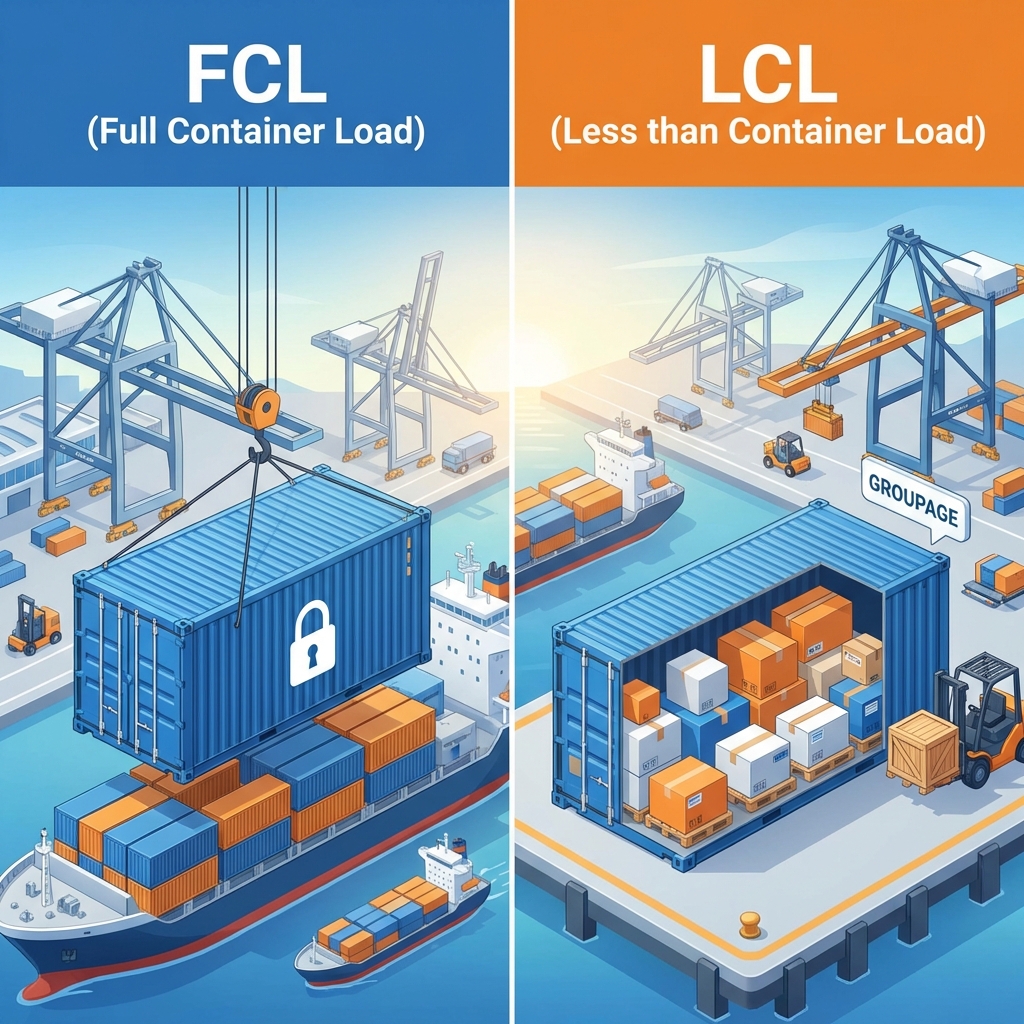
FCL vs. LCL: How to choose for your imports to Morocco?
Full Container Load (FCL) or Less than Container Load (LCL)? Save 15% to 20% on your sea freight by choosing the right mode. 2026 Technical Guide for Moroccan importers.
Let's Optimize Your Supply Chain
Discuss your logistics challenges with a trade expert.