

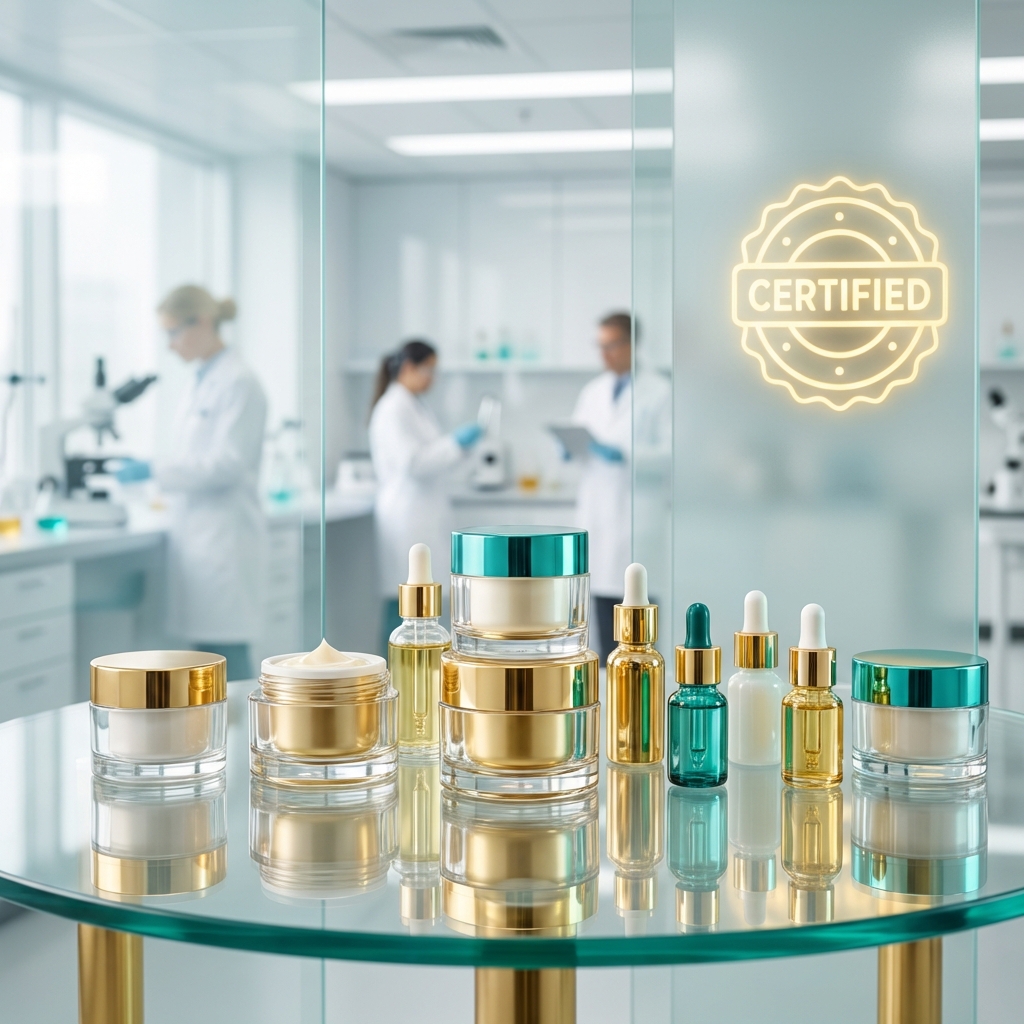
Importing Cosmetics and Parapharmacy to Morocco: Complete AMMPS/DMP Registration Guide 2026
2026 marks a historic turning point with the transition to AMMPS and mandatory Halal certification. Complete guide to registering your cosmetic products.
Equipe Casa Horizon
Transitaire agréé
Sommaire
The Beauty Market in Full Mutation
The Moroccan beauty and wellness market is undergoing unprecedented transformation in 2026. With an increasingly demanding population and regulations aligning with international standards (notably European), importing cosmetic and parapharmacy products can no longer be done 'blindly'.
In 2026, the definite transition from the Directorate of Medicine and Pharmacy (DMP) to the Moroccan Agency for Medicine and Health Products (AMMPS) marks a historic turning point, along with the introduction of new Halal certification requirements for imported products.
Whether you are a distributor looking to introduce a Korean 'K-Beauty' brand, French dermatological care, or Brazilian hair products, this guide breaks down every step of the registration process to ensure a smooth and legal market entry.
🏛️ New Governance: From DMP to AMMPS in 2026
The year 2026 establishes the full operational status of the Moroccan Agency for Medicine and Health Products (AMMPS). This autonomous agency replaces the former prerogatives of the DMP with a reinforced mission of regulation, quality control, and granting Marketing Authorizations (AMM).
For the importer, this means increased digitalization of procedures. File submission is no longer physical but done via an integrated platform allowing real-time tracking. AMMPS aims to reduce cosmetic file processing times to less than 4 months (vs 8-12 previously). This new structure is also stricter on post-market compliance (cosmetovigilance), with unannounced inspections in warehouses.
🏢 Step 1: Declaration of Import Establishment
Before registering a single lipstick or moisturizer, your company must be recognized as a Cosmetic and Body Hygiene Product Establishment (PCHC) by AMMPS.
2026 Prerequisites
Commercial Register
Compliant Premises
Technical Director
Result
📑 Step 2: Product Information File (DIP) Constitution
The Product Information File (DIP) is the heart of your application. Inspired by the European model (EU Regulation No 1223/2009), it must be kept up to date and available to authorities in case of inspection.
DIP Content 2026
Formula
Physico-Chemical
Microbiology
Stability
Safety
Casa Horizon Insight
🧪 Step 3: New CAP Code and Pharmacovigilance
A step often forgotten by new importers is the Poison Control and Pharmacovigilance Center (CAP). Before final submission to AMMPS, every product must obtain a CAP Code.
This code allows product composition identification in case of medical emergency or accidental ingestion. In 2026, interconnection between CAP and AMMPS is automatic. As soon as you initiate your file, a provisional ID is assigned to facilitate traceability.
🌙 2026 Milestone: Mandatory Halal Certification
This is the crucial info of the year: As of October 17, 2026, all cosmetics imported to Morocco must have Halal certification.
Morocco has aligned its regulations with OCI standards. Products containing pork derivatives, ingredients from non-ritually slaughtered animals, or certain forms of unauthorized alcohol will be systematically blocked.
- Options: Certification via foreign body accredited by IMANOR, or direct audit.
- Non-Halal: Products containing forbidden but authorized ingredients (ex: solvents) must bear a clear mention.

Supplier Impact
🏷️ Labeling Standards 2026: Mentions, Language & Cم Logo
Labeling is the first control point during customs clearance. Non-compliant labeling leads to goods rejection.
Mandatory Mentions
Responsible
Ingredients
Arabic Language
Cم Logo
📜 Granting Procedure: ATD vs Registration Certificate (CE)
The importer does not receive their final certificate immediately. The procedure is done in two steps.
The 2 Steps
ATD (Temporary)
CE (Definitive)
💰 Taxation & Customs: Parapharmacy Taxes in 2026
Calculating the landed cost of an imported cosmetic product must integrate customs duties and VAT.
Tax Table
Cosmetics
Parapharmacy
Medical Devices
Morocco Customs Duty Simulator
Estimate the real landed cost of your import (DDP)
1Import Data
Standard rate (Furniture, Auto parts...).
2Simulation Results
Enter the value of your goods to see the tax breakdown.
🚫 Restrictions: PFAS, Microplastics & Cannabis
In 2026, Morocco follows global restrictions on environmental pollutants. PFAS (long-wear makeup) and microplastics (scrubs) are progressively banned.
Cannabis (CBD): Import of cannabis-based cosmetics is possible but subject to double authorization (ANRAC + AMMPS). THC level < 1% mandatory.
🚛 Tempered Logistics
✅ Quick Takeaways: Essentials in 1 minute
AMMPS 2026
Halal
ATD
Arabic Lang
Full DIP
FTA
💡 Conclusion
Importing cosmetics and parapharmacy to Morocco in 2026 is a flourishing opportunity, but requires total scientific and administrative rigor. The transition to AMMPS and Halal requirement mark the end of the improvisation era.
By entrusting your registration strategy to a partner like Casa Horizon, you secure your 'Time-to-Market' and ensure your beauty products arrive on Moroccan shelves with impeccable compliance.
Frequently Asked Questions
Can I import samples for registration without paying taxes?
How long is a cosmetic registration valid?
Are food supplements managed by AMMPS?
Can I use my European labeling as is?
What is the cost of AMMPS file fees?
Sources & Références
Read also

Import Medical Equipment Morocco: DMP Guide 2026
Healthcare sector in Morocco is transforming in 2026. Complete guide on AMMPS registration, device classification, and customs procedures.

Import Furniture & Decor to Morocco: 2026 Guide
Between Asian freight costs, Turkish tariff barriers, and European prestige, choosing the right source is a challenge. This comparative guide analyzes the three giants: China, Turkey, and Italy.

Importing Phones and Electronics to Morocco: ANRT Guide 2026
Importing smartphones and electronics is strictly regulated by the ANRT in 2026. Discover key steps: e-Homologation portal, SAR standards, C-Mark labeling, and tax advantages.
Let's Optimize Your Supply Chain
Discuss your logistics challenges with a trade expert.