

Importing from USA to Morocco: The Ultimate A-Z Guide (2026)
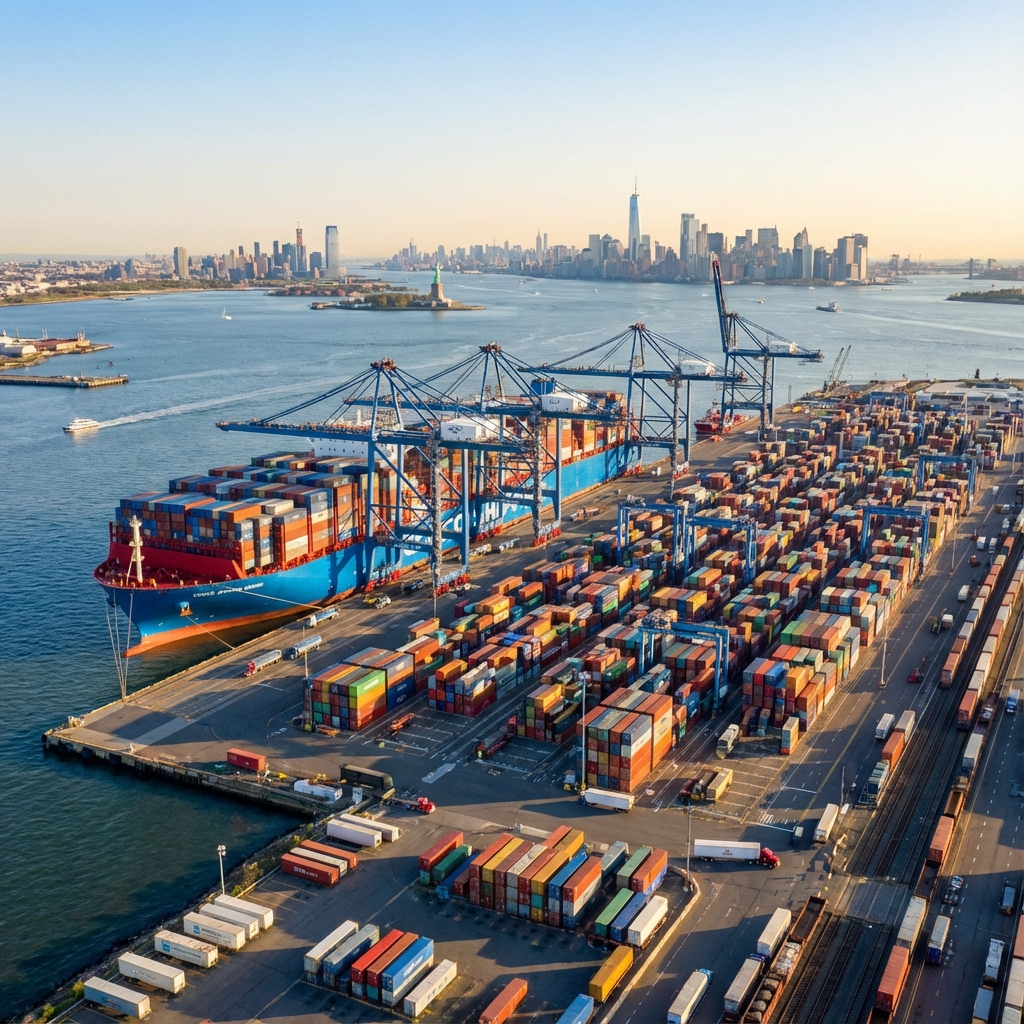
The American Dream at 0% Duty: Opportunity & Complexity
The US represents a unique commercial opportunity for Morocco thanks to the Free Trade Agreement (FTA) signed in 2004. It is one of the rare agreements allowing for a total exemption (0%) of customs duties on almost all industrial and consumer goods.
However, "importing from the USA" is often perceived as the most complex modality by Moroccan freight forwarders. Why? Because of three major barriers:
- Logistics: Transatlantic distance and the crucial choice between East Coast and West Coast.
- The Direct Transport Rule: A customs trap that can cost you the exemption overnight.
- Standards: US standards (FDA, FMVSS for cars) differ from EU/Morocco norms.
This "A to Z" guide aims to give you total mastery of these aspects, whether you import vehicles, technology, or cosmetics.
1. Mastering the Free Trade Agreement (FTA)
To benefit from the 0% rate (instead of 2.5%, 17.5% or 40%), you must scrupulously respect two conditions. Moroccan Customs is uncompromising on this point.
Condition A: Origin (The 35% Rule)
The product must be "Originating from USA". This means:
- Either entirely obtained in the USA (e.g., wheat, oil).
- Or processed in the USA with a Local Added Value of at least 35% of the ex-works price.
Condition B: Direct Transport (The Deadly Trap)
ADHOC: The Golden Rule
The goods must be shipped DIRECTLY from the USA to Morocco without passing through a third country, OR remain under customs bond during transit.
The Catastrophe Scenario: Your container leaves New York, lands in Algeciras (Spain) or Rotterdam to be transshipped onto another vessel (Feeder) to Casa. If the goods leave the customs zone or undergo manipulation, YOU LOSE THE FTA and pay full duties (17.5% or 40%).
The Solution: Demand a "Through Bill of Lading" which covers the entire journey, proving the goods were not altered en route.
The Document: Origin Declaration
Unlike the European EUR1, for the USA, you need a Declaration on Invoice or a specific FTA certificate. Here is the recommended standard wording:
2. Logistics: East vs West, The Big Gap
The United States is a continent. Freight cost and time vary from simple to triple depending on the departure State.
East Coast (The Royal Route)
The ports of New York (NY / NJ), Norfolk (Virginia), and Savannah (Georgia) are best connected to Morocco (often via Tanger Med).
Transit Time: 14 to 20 days. This is the cheapest option.
West Coast (The Headache)
Importing from Los Angeles or Long Beach (California) is complex. The ship must cross the Panama Canal or go around.
Transit Time: 35 to 50 days.
Advice: For California, sometimes ask for a "Land Bridge" (Rail/Truck transport to New York + Boat) to save time, even if more expensive.
3. Special Focus: Importing a Car (Copart / Manheim)
This is the national sport of Moroccan importers. Buying damaged or used vehicles at auctions (Copart, IAAI, Manheim) to repair and resell in Morocco.
Transport: RORO vs Container
Container (Consolidation): Most common method. 3 to 4 vehicles are loaded per 40' container. Economical but requires pro bracing to avoid damage.
RORO (Roll-on / Roll-off): The car rolls into the ship. More expensive, safer, but impossible for non-running cars (damaged).
The Homologation Trap
US cars don't meet European/Moroccan standards (E-mark).
- Indicators: Red in USA, must be Amber in Morocco.
- Speedometer: Miles vs Km/h.
You will need to pass an Individual Approval (RTI) at CNEH in Casablanca. Plan a technical modification budget (approx 5000-10000 DH).
5-Year Law Reminder:
It is strictly FORBIDDEN to import a passenger vehicle older than 5 years (except for MRE returning permanently or vintage vehicles > 30 years).
4. The Obstacle Course (Customs Procedure)
5. Logistics by US Coast
🌊 East Coast (New York)
Time: 14-20 days
Ideal: Machinery, auto parts.
🌶️ Gulf (Houston)
Time: 20-28 days
Ideal: Petrochemicals, heavy equipment.
🌴 West Coast (LA)
Time: 35-50 days total
Option: Land Bridge recommended.
6. The 3 Major Pitfalls
🔌 110V Voltage
US standard is 110V/60Hz. Without a converter, your machines (220V) won't work.
💰 Exchange Rate
USD/MAD fluctuates during transit month. Consider hedging with your bank.
🚢 Direct Transport
Without Through B/L, you lose FTA exemption upon transshipment.
Expert FAQ: Import USA
Is VAT also exempt under FTA?
Can I import cosmetics or supplements?
What is Express Bill of Lading?
Does FTA apply to used cars?
Ready to ship your goods?
Contact us now for a personalized and free quote