

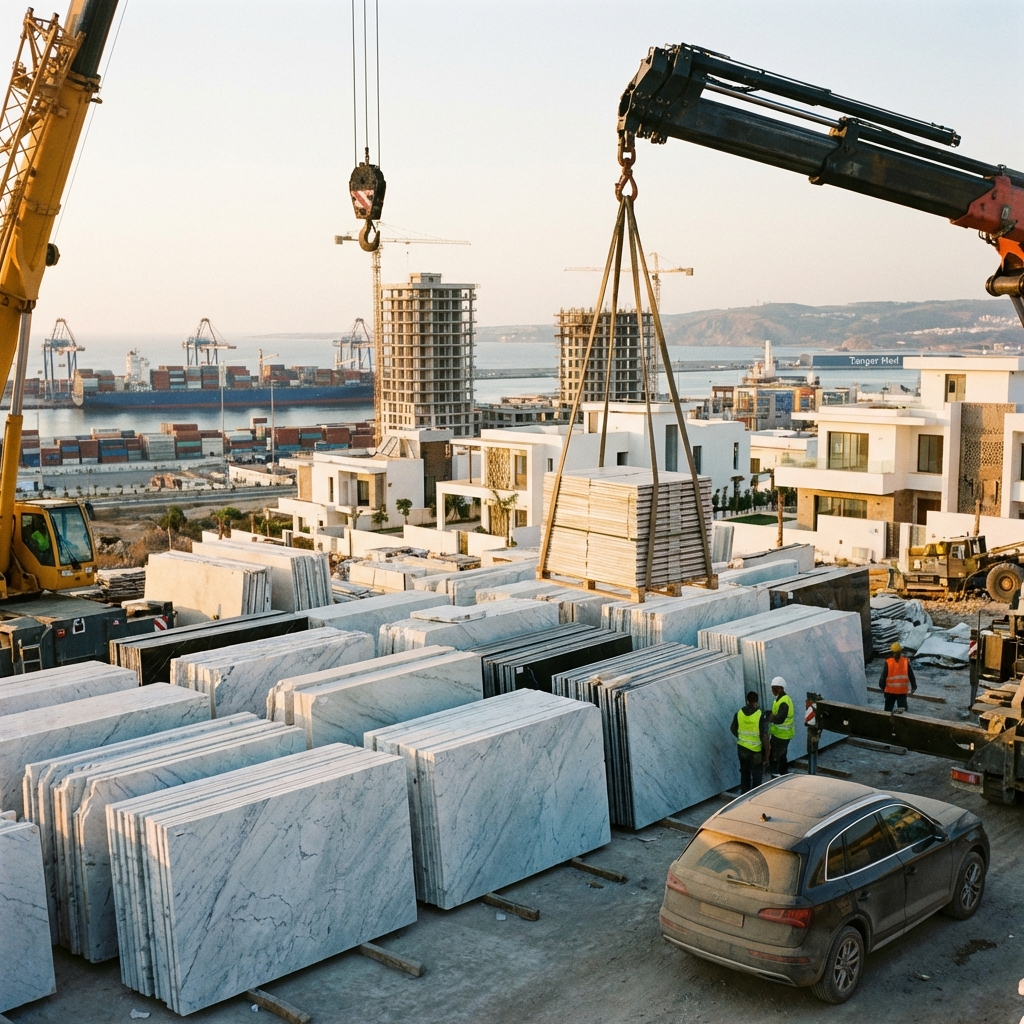
Importing Tiles, Marble, and Sanitary Ware to Morocco: The 2026 Guide
Housing program, World Cup 2030: Construction is booming. 2026 Guide to mastering Article 19 bis, C-Mark, and anti-dumping measures.
Equipe Casa Horizon
Transitaire agréé
Sommaire
The construction and public works (BTP) sector in Morocco is experiencing unprecedented effervescence in 2026, driven by the 2030 World Cup projects and the direct housing aid program. For real estate developers and contractors, importing finishing materials—tiles, marble, and sanitary ware—is a strategic lever to stand out through quality.
However, importing these heavy and fragile materials can no longer be improvised. Between the entry into force of Article 19 bis of the 2026 Finance Law on stock traceability, the extension of the Cم marking (C-Mark) to construction products, and trade defense measures (anti-dumping), the regulatory framework has become surgical. This comprehensive guide gives you the keys to navigate this precision logistics.
🏗️ The Construction Industry in 2026: Quality and NM Standards
In 2026, Morocco no longer accepts "low-end" materials on its major construction sites. The Ministry of Industry has generalized the application of mandatory Moroccan Standards (NM) to ensure building safety and durability. Whether it's the wear resistance of porcelain stoneware (PEI) or the enameling of a sanitary basin, every imported product is now scrutinized.
The market is segmented between mass tiles (Turkey, Egypt), premium design (Spain), and luxury marble (Italy). Importing in 2026 also means meeting the requirements of the Investment Charter, which favors low-carbon footprint materials.
🛑 Article 19 bis of LF 2026: The New Storage Obligation
This is the major change of the year. Under Article 19 bis of the Customs Code (LF 2026), any importer of construction materials must now specify the exact address of the storage or processing location of their goods upon customs declaration.
Why this rigor?
The government wants to eradicate the informal sector in the building industry. "Ghost" materials that disappear into nature after port clearance to supply undeclared construction sites are the priority target.
Penalty:
An inaccurate or incomplete warehouse declaration leads to a fine ranging from 30,000 to 60,000 MAD.
Casa Horizon Insight: Ensure your warehouse is already referenced in the customs BADR system to avoid automatic rejection of your import title.
🧱 Importing Tiles: Import Duties and Anti-Dumping Measures
Tiles are the most complex product to import to Morocco due to the protection of the local industry (Cera-Maroc).
- Import Duties (DI): The standard rate is 40% for countries without an agreement.
- Free Trade Agreements: 0% for EU (EUR.1) or USA.
- Anti-Dumping Measures: Warning! In 2026, Morocco maintains definitive anti-dumping duties on certain origins (notably Spain and Egypt) for certain tile formats. These taxes are added to customs duties and can reach 15 to 25%.
💎 Prestige Marble: Sourcing (Italy, Spain, Egypt) and Taxes
Marble is imported either as raw blocks or polished slabs. In 2026, demand for Italian (Carrara, Statuario) and Egyptian (Galala) marble remains strong.
- Customs Nomenclature: Raw marble (HS Code 2515) is taxed less than worked marble (HS Code 6802) to encourage local cutting.
- VAT: Applied at a rate of 20%.
- Weight: This is the major logistics challenge. A 20-foot container is limited to about 26-28 tons. Calculation of transport cost per ton is more relevant here than per square meter.
🚽 Sanitary Ware: C-Mark and Technical Conformity
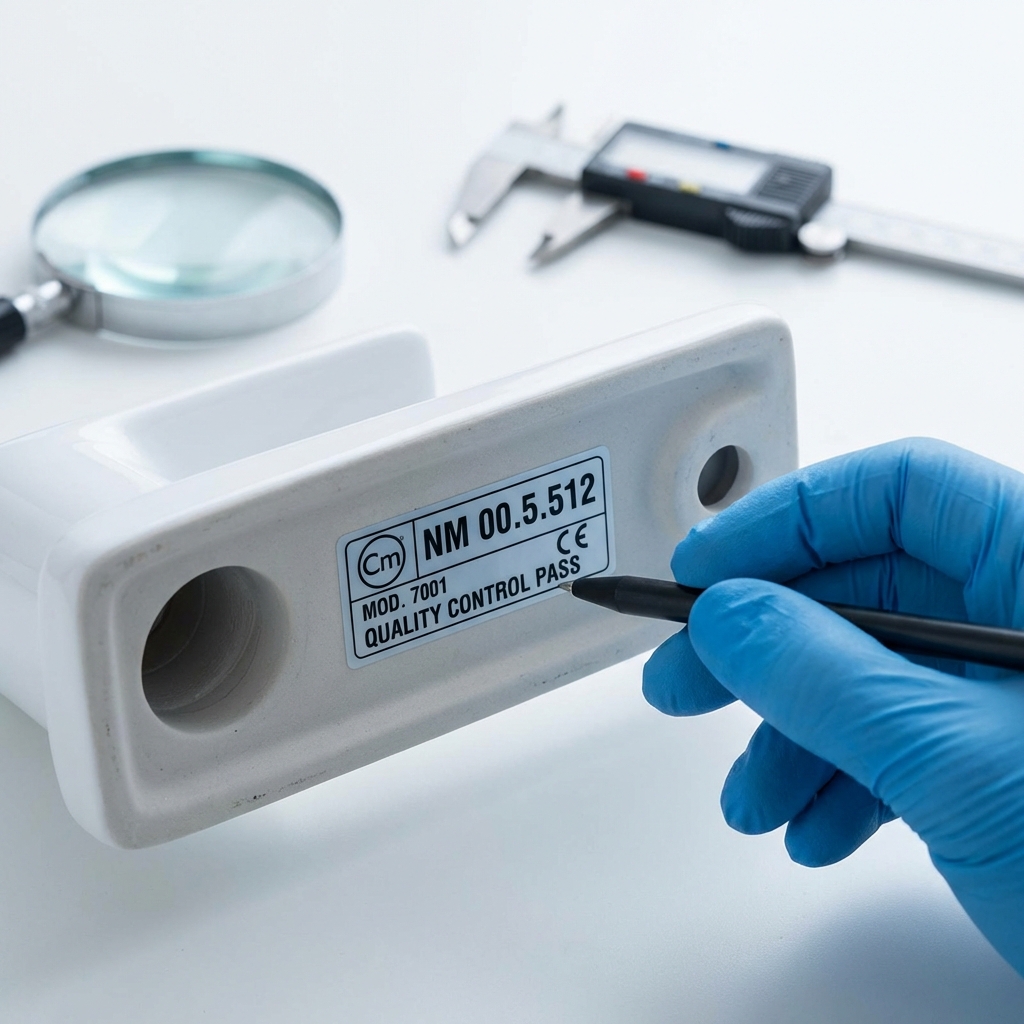
Bathtubs, bowls, basins, and faucets are now subject to the Cم marking (C-Mark). This marking attests that the product complies with Moroccan safety and hygiene requirements (NM EN Standards).
- VOC Inspection: For Turkish (see Turkey Guide) or Chinese brands (see China Guide), an origin inspection is essential. The inspector checks enameling quality, water flow, and impact resistance.
- Taxes: Faucets can be taxed up to 40% (protection of national foundry industry), unless preferential origin.
🧮 2026 Customs Calculator for Finishing Works
Here is a simulation for a batch of Spanish tiles valued at 200,000 MAD (EU Origin with EUR.1):
| Component | Calculation (CIF Base) | Amount |
|---|---|---|
| Import Duty (DI) | 0% (EU Agreement) | 0 MAD |
| Anti-Dumping Duty (if applicable) | 18% (Example) | 36,000 MAD |
| Parafiscal Tax (TPI) | 0.25% | 500 MAD |
| VAT (20%) | 20% on [Base + AD + TPI] | 47,300 MAD |
| Total Customs | - | 83,800 MAD |
🚢 Logistics: Preventing Breakage and Optimizing Loading
Logistics cost can represent up to 30% of the cost price of your materials.
- Container Choice: For tiles and sanitary ware, the 20' Standard container is preferable to the 40' as it better supports high weight on a small surface.
- Stowage: Demand "air cushions" (Dunnage bags) between sanitary pallets to avoid the domino effect during storms at sea.
- Insurance: Take "All Risks" insurance. In marble, a single crack on a slab can render the entire slab unusable for a luxury project.
✅ Quick Takeaways
- Article 19 bis: Your warehouse address is mandatory on the declaration (60k MAD fine otherwise).
- Anti-Dumping: Check rates on Spanish and Egyptian tiles before signing the contract.
- C-Mark: Mandatory for sanitary and soon for all NM tiles.
- Weight vs Volume: Optimize your loads in 20' containers to avoid overloads.
- Zero Duties: Prefer EU origin (Italy/Spain) with EUR.1 to cancel the 40% DI.
💡 Conclusion
Importing construction materials to Morocco in 2026 is a lucrative but rigorous adventure. The rise of traceability requirements (Article 19 bis) and technical conformity (C-Mark) testifies to the Kingdom's desire to professionalize its real estate sector.
For the importer, profit is no longer made only on the purchase price, but on optimizing customs duties and managing breakage-free logistics. By entrusting your project to Casa Horizon, you secure your supplies and ensure that your prestige materials arrive on your sites in total compliance with the 2026 Finance Law.
Questions Fréquemment Posées
Can I store my tiles in any depot after the port?
Is marble subject to VOC conformity certificate?
What are the taxes on Chinese sanitary ware?
Is it possible to import "second choice" tiles?
What is the ideal Incoterm for importing Italian marble?
Sources & Références
Read also
Supplier Audit in China and Turkey: The Anti-Scam Guide 2026
Secure your imports with a professional factory audit. Verify the legality, capacity, and quality of your suppliers in China and Turkey before paying.

Importing Packaging Materials to Morocco: Complete Guide and Ecological Taxes 2026
Expert guide for importing packaging to Morocco: Law 77-15, Ecological Tax, NM standards, and Article 19 bis. Secure your costs and compliance in 2026.
Import Fitness Equipment Morocco: 2026 Guide
Complete guide to importing fitness equipment to Morocco: C-Mark, NM Standards, Customs Clearance, and Logistics. Equip your gym with full compliance.
Let's Optimize Your Supply Chain
Discuss your logistics challenges with a trade expert.